Logistics Strategies
Many roads lead to Rome.
 What will your logistics of the future look like? Which warehouse locations, which level of automation, how much inventory do you need? Or do you even still need your own logistics at all?
Even today – in the age of intermodal logistics – many roads may lead to Rome, but not every route is considered modern and cost-effective. For example, it is far more than just a cost issue whether your products travel to Italy by road, rail or air freight.
► First prerequisite: define clear criteria.
A well-founded logistics strategy helps us make good decisions even in day-to-day operations, for example between
- production, transport or supplier costs
- delivery reliability, customer proximity or environmental sustainability
- weather, strike or security risks
The logistics strategy outlines different scenarios, compares future costs and enables a holistic evaluation based on weighted criteria.
You want to go to Rome as well? Here are the details:
► Objectives of LogistikPlan strategy consulting
A logistics strategy is not just about a make-or-buy decision or reducing process costs, but about setting long-term priorities. All too often, a company’s own logistics objectives have not yet been clearly defined.
Our consulting objective is to position your company’s logistics as a strategic core competence – with a customer-oriented perspective and interdisciplinary sub-concepts.
► Conflicting objectives in the optimization of logistics systems
Key criteria for the development of logistics strategies must be aligned at the beginning of the project:
- Minimization of costs
- Relief of in-house logistics capacities
- Scalability and flexibility in response to changes in demand
- Ensuring logistics quality requirements
- Influence on the customer relationship
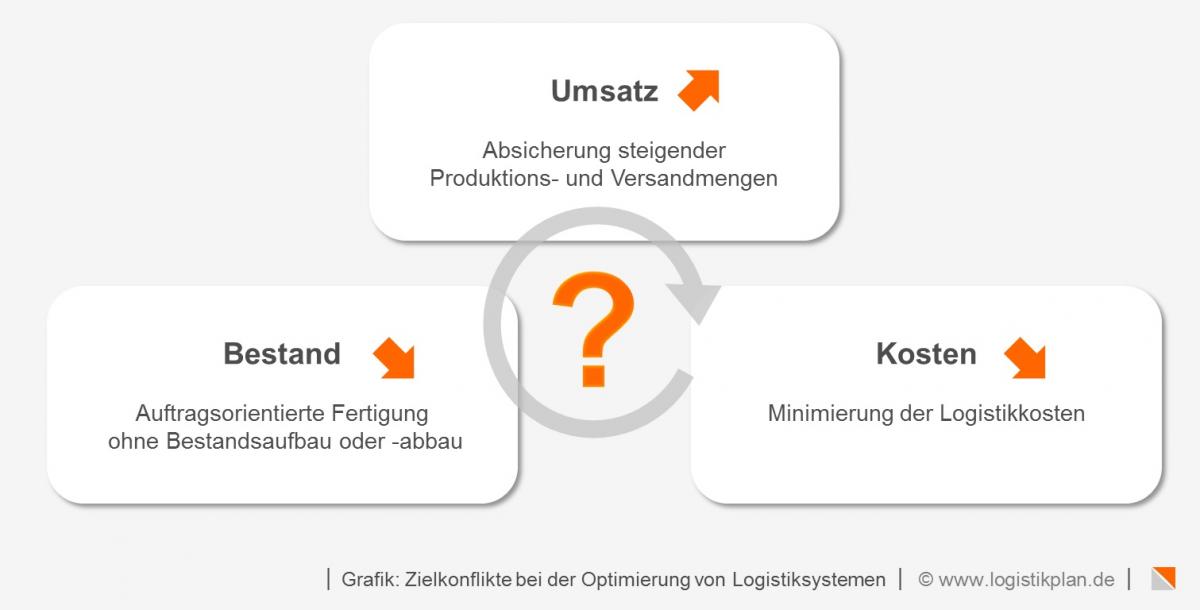 LogistikPlan overview: conflicting objectives in the optimization of logistics systems
► Key focus areas of LogistikPlan consulting
- Definition of future logistics requirements
- Market analysis, current and target positioning of in-house logistics functions within the market environment
- Forecasting and quantification of medium- and long-term freight and warehouse volumes
- Scenarios for centralized and decentralized distribution, identification of potential optimal locations
- Evaluation of scenarios based on strategic, logistics and economic criteria
- Definition and formal approval of the logistics strategy
► Strategy defined? What comes next?
- Breakdown of the logistics strategy into sub-concepts –> see Logistics Consulting
- for inbound logistics
- for production logistics
- for warehouse logistics and
- for outbound logistics
- Action plan and definition of tasks for operational logistics concepts, e.g. for
- Site development for production and warehousing –> see Site Strategies
- Freight procurement and transport management –> see Transport Concepts
- Supply chain management –> see Supply Chain Management
- Logistics IT systems –> see IT Concepts
Results at a glance:
- Current-state positioning
- Forecasts and scenarios
- Logistics strategy